You’re comparing quotes for car window tint. One film advertises very high infrared rejection. Another lists 55% TSER. The installer says both are excellent, and you’re left wondering which one will actually keep your cabin cooler.
Here’s the catch: those two numbers measure different things, and neither tells the full story on its own. Once you know how to read them, comparing car window tinting options gets easier, and it’s much easier to compare films based on actual performance rather than marketing claims.
This guide explains IR rejection, TSER and VLT in plain English, shows how Victoria’s tint rules shape your options, and gives you a six-step checklist for reading any spec sheet.
Quick answer: TSER (total solar energy rejected) is one of the most useful figures for comparing overall solar heat rejection in car window tint because it considers the broader solar spectrum. IR rejection only covers part of it, and brands can test and report it differently. Compare TSER at the same VLT, then check how the IR figure was measured.
How Solar Energy Heats Your Car
Solar radiation reaching your car includes ultraviolet, visible and infrared wavelengths. These interact differently with automotive glass and window film and, together, contribute to solar heat entering the cabin. This is why a parked car can become extremely hot, and why a good film can help reduce the amount of solar energy entering the vehicle.
- Infrared (IR): Invisible to the eye and associated with the warmth you feel from sunlight. It represents a significant portion of solar energy.
- Visible light: The light you can see. It also contributes to solar energy entering the vehicle.
- Ultraviolet (UV): A smaller portion of the solar spectrum, but important because UV exposure can contribute to fading and deterioration of interior materials and skin exposure.
That’s why a heat claim based on only one of these can be misleading. Your cabin heats up from the broader solar spectrum, not just the part you can’t see.
IR Rejection vs TSER: What Do the Numbers Mean?
Infrared rejection (IRR) measures the percentage of infrared energy rejected by a film. It is often highlighted in advertising, but describes only one part of the solar spectrum. Manufacturers may report IR rejection at a single wavelength or across a broader range, so figures from different brands are not always directly comparable.
Total solar energy rejected (TSER) measures the proportion of incoming solar energy rejected by the film and glass under specific test conditions. It provides a broader indication of solar-control performance. For example, a 50% TSER means roughly half of the measured solar energy is rejected under those conditions.
A film may advertise IR rejection above 90% while having a TSER of 50–65%. These figures can both be accurate because they measure different things. When comparing car window tinting options, use TSER to assess overall solar rejection and IRR as supporting information.
- Visible Light Transmission (VLT): The percentage of visible light that passes through the glass and film. It affects window darkness and visibility.
- UV rejection: Indicates how much ultraviolet radiation is blocked.
- Reflectance: Helps determine whether the finished tint meets applicable legal requirements.
Compare films at the same VLT and under similar test conditions. A darker film often has a higher TSER because it blocks more visible light, but that does not automatically make it the better option. A lighter film may provide suitable heat rejection while maintaining better visibility.
Why You Should Compare Car Window Tint at the Same VLT
Visible light transmission (VLT) is the percentage of visible light that passes through the window. Darker film blocks more visible light, so TSER generally climbs as VLT drops. A 5% film will usually show a higher TSER than a 50% film of the same technology, all else being equal.
That doesn’t make the darker film better. It just means you’re comparing darkness alongside technology. A fair test uses the same VLT across different films, because that shows what the film itself is doing.
Victorian Car Window Tinting Rules
You can’t simply go darker to control heat, so Victoria’s rules matter. Transport Victoria sets these limits for light passenger vehicles:
- Windscreen: Minimum 70% VLT. Film isn’t allowed except for a band at the top, above the wiper arc or across the top 10% of the windscreen (whichever is greater), and it can’t cover any sensors or cameras.
- Front side windows: 35% VLT or more.
- Windows behind the driver: 20% VLT or more, as long as the car has a rear-view mirror on each side.
- Reflectance: No more than 10% on any window fitted with film.
- Factory privacy glass: Film can’t take the final VLT below the legal minimum. If the factory glass is already below it, no film can go on at all, including clear film.
The takeaway is simple. Legal limits cap how dark you can go, so your heat performance has to come from the film’s technology, not its darkness. That’s where ceramic IR-rejecting films can be useful, because they’re designed to deliver strong heat rejection at lighter, road-legal shades. Rules can change, so check Transport Victoria’s window tinting page before you decide.
Clear film is not automatically exempt from VLT requirements. What matters is the final light transmission of the glass and film together. This is particularly important on vehicles with factory privacy glass.
How to Read a Car Window Tint Spec Sheet: Six Checks
Spec sheets look intimidating, but you only need to check six things.
- Find the TSER and the VLT it was tested at. A TSER with no VLT beside it is only half the picture. Comparing TSER values at different VLT levels can make one film appear better simply because it is darker.
- Check how IR rejection was measured. Look in the footnotes for a single wavelength or a broad band, so you know whether two films are really comparable. A higher IR rejection percentage does not automatically mean better overall heat rejection if the films were tested using different methods.
- Note the glass used in testing. Spec sheets are typically measured on standard clear glass. XPEL, for example, tests on 3 mm glass, so results on your car’s own glass, especially factory-tinted glass, can differ slightly. The type and thickness of the glass can affect the final performance figures, so use manufacturer data as a guide rather than assuming the exact same result on every vehicle.
- Ask for the numbers for your exact shade. An “up to” figure describes the best case in the range, not necessarily the shade you’re buying. Always ask for the performance figures for the specific VLT you plan to install rather than relying on the headline figure shown in an advertisement.
- Check whether the figures are based on film and glass together. Performance results can depend on the glazing used during testing, so make sure you’re comparing specifications on a like-for-like basis. If one manufacturer tests film on clear glass and another uses a different glass configuration, their figures may not provide a direct comparison.
- Confirm the legal VLT and the warranty. A film that performs brilliantly but isn’t road legal in Victoria is an expensive mistake. The warranty is also worth checking because it can give you important information about coverage for issues such as bubbling, peeling, discolouration or film failure.
Why Professional Auto Tinting Installation Matters
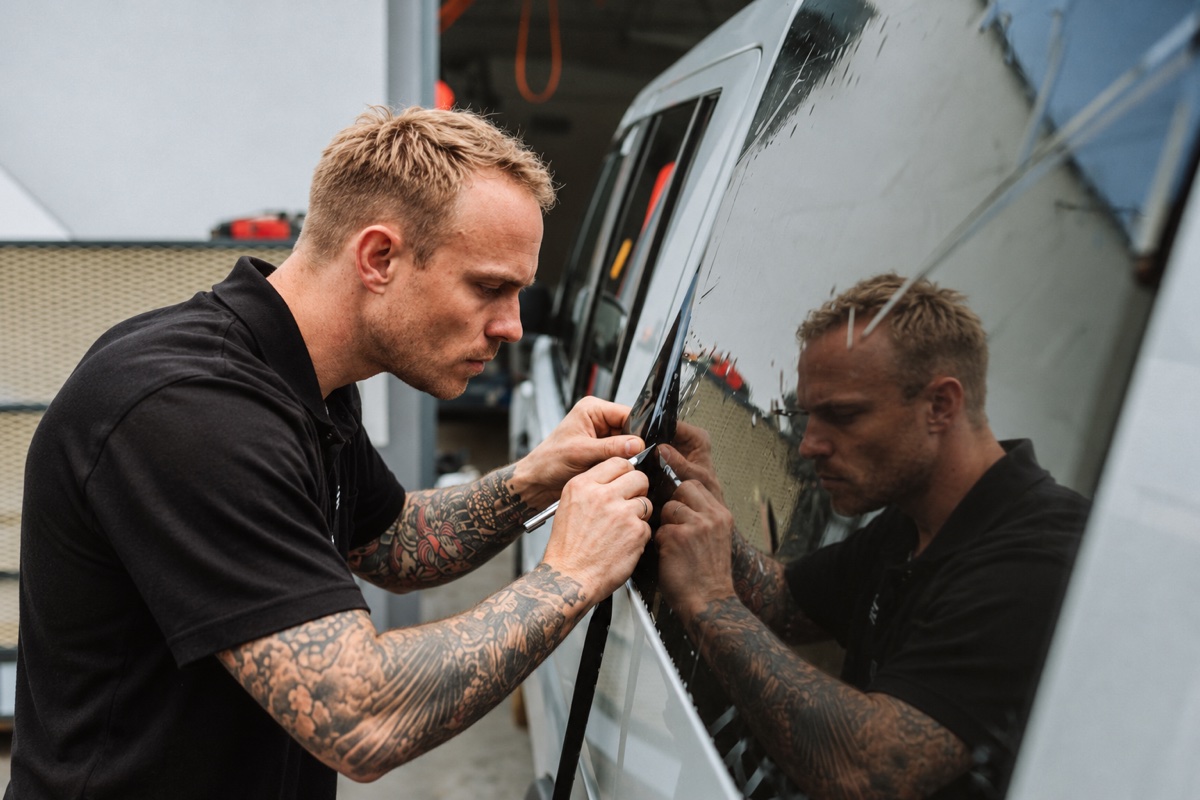
The film matters, but so does the person fitting it. Poorly prepared glass, contamination, lifting edges, or trapped moisture can affect the appearance, durability, and performance of a tint installation, no matter how good the spec sheet looks. If you’re still weighing up film types, our guide to choosing the best auto tint film for your climate breaks down dyed, carbon and ceramic options.
A good installer should be happy to show you the spec sheet, explain the test method behind each number and tell you straight away if a shade isn’t legal. At Peninsula Tint & Paint Protection, our team brings 17 years of experience to every car tinting job, installs premium ceramic films including the XPEL PRIME XR PLUS, and works in a dust-free studio built to avoid the bubbles and bungled applications that can come from rushed tint shops.
Choosing Car Window Tint with Confidence
Heat rejection numbers aren’t tricks, but they’re easy to misread. Keep these three habits, and you’ll choose well:
- Lead with TSER: It’s a useful measure of how much total solar energy the film keeps out.
- Treat IR rejection as supporting evidence: It’s useful, but only when you know how it was tested.
- Compare at the same VLT: Darker film can increase TSER, so match the shade before you match the numbers.
Add Victoria’s legal limits on top, and you’ve got a reliable way to pick car window tinting that keeps your car cooler while remaining within the applicable requirements.
The easiest way to compare films is to look at the spec sheet for the exact shade on your vehicle. Send us your details through our quote form and we’ll walk you through TSER, IR rejection, and VLT; check what’s legal for your car; and recommend a film that suits how you drive.